Every New Hire Shouldn't Have to Guess What Your Brand Sounds Like
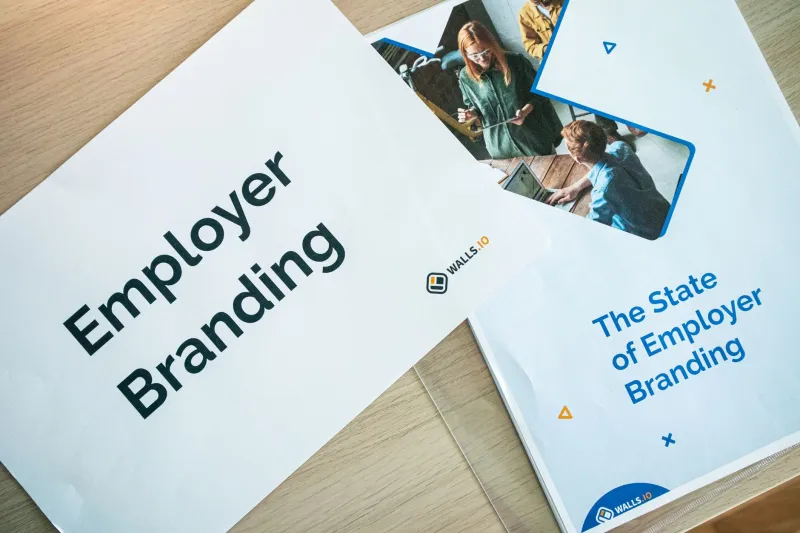
Let's say you've spent two years carefully building a brand voice. Your social media has a distinct personality. Your email campaigns hit the right tone. Customers recognize your style and respond to it. Then you bring on a new marketing coordinator, a freelance copywriter, or a fresh agency — and slowly, almost imperceptibly, things start to drift.
The emails sound a little stiffer. The Instagram captions feel generic. The website copy that used to feel like you now reads like it could belong to anyone.
This is the brand handoff problem. And it's one of the most common — and most quietly damaging — issues growing businesses face.
The Real Cost Nobody Talks About
Most business owners assume that brand inconsistency is a cosmetic issue. A slightly different tone here, an off-message headline there — what's the big deal?
The big deal is trust.
Your customers don't consciously audit your brand voice, but they feel when something is off. Research consistently shows that brand consistency can increase revenue by up to 23 percent. When your message shifts every time a new person steps into a role, you're not just creating a design problem — you're eroding the familiarity and reliability that make customers choose you over someone else.
And the financial cost goes beyond lost customers. Think about the hours spent correcting copy, reworking campaigns, and sending revision after revision to contractors who just don't quite get it. That time adds up fast.
Why This Keeps Happening
Here's the honest answer: most businesses treat brand knowledge like institutional memory — something people are just supposed to absorb over time.
New hires get a job description, maybe a style guide PDF that hasn't been updated since 2021, and a vague instruction to "match our tone." Freelancers get a brief. Agencies get a kick-off call. And everyone does their best to reverse-engineer what your brand actually sounds and feels like based on whatever examples they can find.
The problem isn't a lack of effort. It's a lack of infrastructure.
Your brand has a story — a reason it exists, values it holds, a specific way it talks to specific people. That story doesn't transfer automatically. It has to be taught.
What a Real Brand Onboarding Framework Looks Like
Whether you're bringing on a full-time employee, a part-time contractor, or a new creative agency, every person who speaks on behalf of your brand needs the same foundation. Here's a simple framework to build that foundation.
1. The Brand Origin Brief This is a one-to-two page document that explains why your business exists, who it serves, and what it stands for. Not your mission statement — something more human than that. Think of it as the story you'd tell someone at a dinner party who asked about your business. Include the problem you solve, the customer you serve, and the values that guide how you operate.
2. Voice and Tone Examples (With Context) Don't just say "we're friendly and professional." Show it. Pull three to five examples of content that nails your brand voice — a social post, an email, a product description — and annotate them. Explain why those examples work. What words were chosen deliberately? What was avoided? This gives new team members a reference point that's concrete, not abstract.
3. The Do Not Say List Every brand has phrases, words, or approaches that feel completely wrong. Document them. Whether it's overly corporate jargon, buzzwords your audience hates, or a competitor's catchphrase that's gotten too close to your space — spell it out. This list is often more useful than a list of what to do.
4. Audience Profiles That Go Beyond Demographics Age and location don't tell someone how to talk to your customer. Include psychographic detail: what your audience values, what frustrates them, how they talk about their own problems. When a new copywriter understands who they're writing for at a deeper level, the voice tends to follow naturally.
5. A Brand Voice Checklist for Final Review Before any piece of content goes out — especially early in someone's tenure — give them a five-to-seven question checklist. Does this sound like us? Does it address the customer's real problem? Does it avoid our off-brand phrases? Simple questions, but they create a habit of self-auditing that sticks.
Making the Handoff an Actual Process
Documentation alone isn't enough. The handoff has to be a real conversation, not just a file drop.
For full-time hires, schedule a dedicated brand orientation session in the first week — separate from the general onboarding. Walk through the brand story, answer questions, and share examples together. This signals that brand alignment isn't an afterthought; it's a core part of the job.
For contractors and agencies, build a brand briefing into your standard contract process. Before a single deliverable is created, hold a working session focused entirely on brand voice, audience, and expectations. Then require a small test piece — a sample email, a draft social caption — before the real work begins. This surfaces misalignment early, when it's easy to correct.
And here's something most businesses skip entirely: a feedback loop. When someone produces content that misses the mark, document why it missed. Over time, those notes become your most useful brand training resource.
The Brands That Get This Right
Consider how major US brands — think Patagonia, Mailchimp, or even a well-run local business with a loyal following — maintain consistency across dozens of touchpoints, multiple team members, and constant content production. They're not doing it through talent alone. They've built systems that make brand alignment the default, not the exception.
You don't need a massive team or a Fortune 500 budget to do the same. You need documentation, intentional onboarding, and the discipline to treat your brand story as something worth protecting every time a new person enters the picture.
Your Brand Is Only as Consistent as Your Last Hire
Every new person who touches your brand is either reinforcing it or quietly undermining it — usually without meaning to. The fix isn't to micromanage every caption and email. The fix is to build a system that makes consistency achievable for anyone, regardless of how long they've been with you.
At Jay Creative Fixz, we see this problem constantly with businesses that have strong visual identities but zero infrastructure for communicating their brand story internally. The creative work is only half the battle. The other half is making sure every person in your orbit knows how to carry it forward.
Get the handoff right, and your brand stays sharp no matter who's holding the pen.